

Sitting at a kitchen table late at night, staring at a bank balance that grows steadily yet never quite feels large enough, is a experience shared by households across the world. You look at the rising cost of childcare, the steady climb in rent or mortgage rates, and the unpredictable swings in global financial markets. In response, the instinct to hold tightly onto liquid cash feels entirely rational. Cash offers instant control, immediate access, and the psychological comfort of knowing that if a emergency strikes tomorrow, the money is right there.
Yet, this defensive posture creates a quiet tension that many families struggle to articulate. Keeping large sums in cash to handle short term uncertainty often means sacrificing the growth needed to protect future purchasing power against persistent inflation. On the other hand, committing funds into long term illiquid assets can leave a family vulnerable if life demands an abrupt pivot next month. Understanding this trade off is not about finding a perfect formula, but about recognizing what each decision actually costs.
Cash feels safe because it eliminates nominal loss. If you place ten thousand dollars in a standard bank account today, you can be certain that ten thousand dollars will be there next month. This absolute certainty makes emergency fund liquidity one of the most effective psychological safety nets in personal finance. It allows individuals to navigate sudden job changes, medical bills, or household repairs without turning to high interest debt.
The comfort of nominal stability can easily obscure the subtle mechanics of erosion. While the numerical balance in a bank account remains intact, inflation purchasing power gradually diminishes what those numbers can buy over time. Cash protects you from short term market swings, but it offers no built in defense against the steady rise of living expenses. Recognizing this distinction is essential, because mistaking short term capital preservation for real financial resilience can leave a household vulnerable over longer horizons.
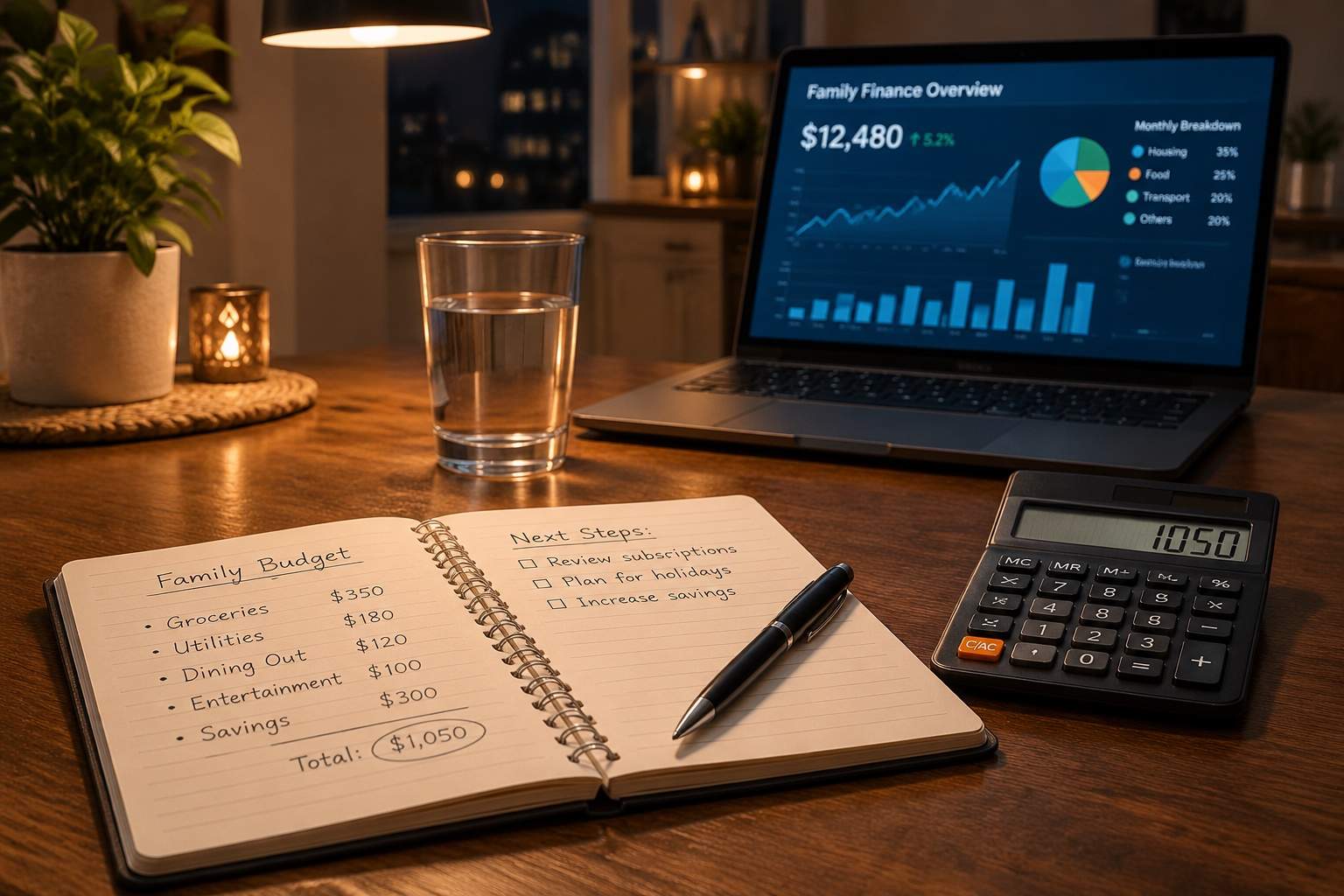
Every financial decision carries a trade off, even the decision to do nothing. When you choose to keep surplus cash in a low yield account beyond what is required for short term security, you incur an opportunity cost of cash. That money is temporarily removed from productive vehicles that might otherwise compound over decades, such as diversified funds, bonds, or real estate.
Inflation acts as a silent cost on uninvested cash that compounds over extended periods. If the price of goods and services rises by three percent annually while your cash earns minimal interest, the real value of your savings declines. Over a five or ten year period, this loss of purchasing power can be significant enough to alter major life plans.
Holding cash is rarely a free choice; it is an active exchange where immediate flexibility is bought at the expense of long term growth. The challenge lies in deciding how much of that flexible buffer your household actually needs, rather than hoarding liquidity out of generalized anxiety.
Balancing cash against growth assets requires managing long term asset allocation trade offs. Assets designed to outpace inflation usually require time to work and often experience short term price swings. If you are forced to sell a long term investment during a market downturn simply because you ran out of accessible cash, you lock in temporary losses and undermine your broader strategy.
An emergency fund is not meant to generate wealth; its primary job is to buy time and maintain choices. The objective is to cover essential living costs during unexpected disruptions so that long term assets remain untouched. When an emergency fund expands far beyond its operational purpose, it shifts from a targeted risk management tool into a drag on total household wealth.
Finding the right size for a cash cushion depends heavily on individual circumstances, such as job stability, household debt levels, and dependable income streams. A single earner in a volatile industry naturally requires a different cash cushion than a dual income household with secure employment.
Financial advice often assumes long planning horizons, encouraging people to invest early and wait out market volatility over several decades. In reality, personal life horizons often shorten dramatically when major transitions arise. Planning for a child's education, caring for aging parents, or contemplating a career change reduces the time frame available to recover from investment downturns.
When life horizons shorten, immediate capital preservation gains legitimate priority over theoretical long term returns. Expecting every dollar to work at maximum efficiency ignores the human element of risk management. If holding extra cash enables a career transition that ultimately increases your earning potential, that cash served a highly valuable purpose, even if its financial yield was low. Financial security is not evaluated solely by portfolio performance, but by how effectively your overall structure supports your actual choices.
There is no single allocation rule that fits every family's circumstances or risk tolerance. Financial tools like cash savings, fixed income instruments, real estate, and equities serve distinct roles across different timeframes and risk profiles. No individual tool is inherently superior; each solves one problem while introducing another.
I often reflect on how easily we confuse procedural rules with genuine judgment. We seek fixed mathematical answers to questions that are fundamentally about personal comfort, career security, and life goals. The objective of personal finance is not to optimize every cent on a spreadsheet, but to build a framework clear enough to help you see the costs behind your choices. Whether you lean toward maximum cash flexibility or aggressive long term growth, real resilience comes from understanding precisely what risks you are taking, and why you chose them.
Disclaimer: Mention of any brand or trademark is for identification purposes only and does not indicate any partnership or endorsement.
