

I recently spoke with a colleague who found himself in a situation that perfectly illustrates the geographic trap. He is a successful professional with a substantial savings account in his home country, a place he considers stable and familiar. His daughter had just been accepted into a prestigious university abroad, and the deposit was due on a Tuesday. On Monday, he initiated the transfer, confident in his balance. By Wednesday, the funds were still sitting in a compliance queue, and a sudden shift in the exchange rate meant his local currency had lost four percent of its value against the tuition currency overnight. He had the money, but he didn't have the utility. He was wealthy in one zip code and struggling in another.
We often think of money as a digital number that exists everywhere at once, but the reality is far more tethered to the ground. Most of us build our financial lives within the borders where we earn our paychecks. We use local banks, save in local currency, and measure our progress against local inflation. This is a rational and often necessary strategy for daily life. It provides a sense of security because we understand the rules of the game in our own backyard. However, the moment our lives or our dreams expand beyond those borders, we discover that money has a physical weight.
There is a deep-seated human tendency to trust what is close to us. We feel that keeping our savings in a bank we pass on the way to work is inherently safer than placing it in a jurisdiction thousands of miles away. This home bias is not a mistake; it is a reflection of our need for control and accessibility. For many, the local bank is the bedrock of an emergency fund or a short-term savings goal. It is the place where the rules are clear and the language is familiar. But we must ask ourselves if this comfort comes at the cost of being entirely dependent on a single economic ecosystem.
When you keep one hundred percent of your assets in one country and one currency, you are essentially making a massive, concentrated bet. You are betting that the local economy will always remain strong, that the local currency will maintain its international purchasing power, and that the local banking regulations will always favor your immediate needs. For a person whose life is entirely contained within that country, this risk is manageable. But for anyone with international aspirations, whether that is travel, overseas education, or retirement in a different climate, this concentration becomes a vulnerability.
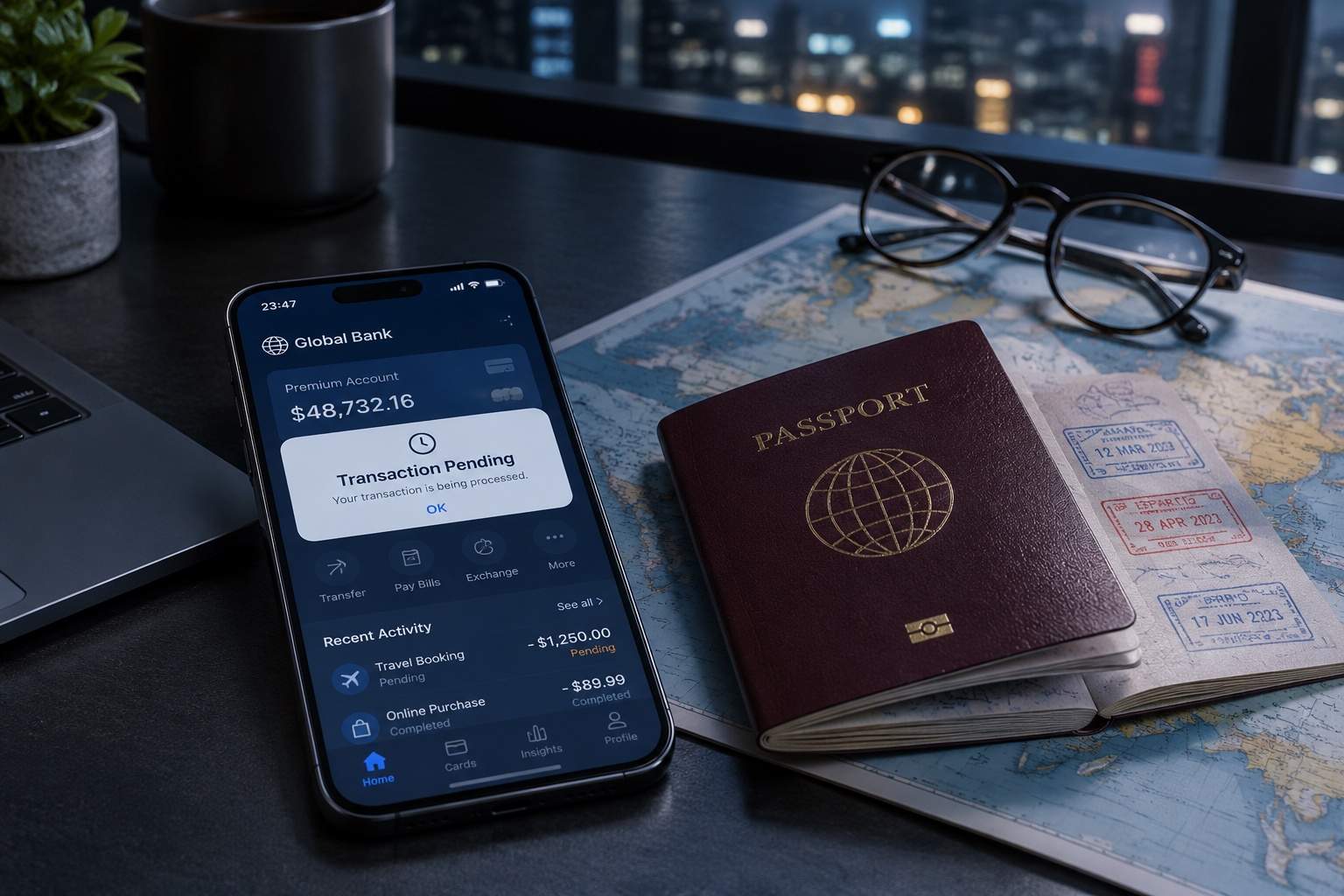
Currency risk is often discussed as something that only concerns hedge fund managers or multinational corporations. In reality, it affects anyone who buys a plane ticket or pays for a subscription service priced in a foreign currency. If your local currency devalues, your "safe" savings account effectively shrinks in the context of the global market. You haven't lost any nominal units of money, but you have lost the ability to trade those units for the things you need in the wider world. This is the hidden tax of staying purely local.
Liquidity is not just about having cash; it is about having the right cash in the right place at the right time. The geographic trap is sprung when the friction of moving money exceeds the speed of your life. Compliance holds, intermediary bank fees, and time zone differences are the gears of this friction. I have seen people miss out on investment opportunities or face late fees on important payments not because they lacked the funds, but because their funds were trapped in a system that didn't recognize the urgency of their global requirements.
The three-day hold is a classic example of how traditional banking can fail a modern, mobile life. In a world where we can send an email in seconds, moving money across a border still feels like sending a physical letter in the 1950s. This delay is often a result of necessary anti-money laundering checks and aging infrastructure. While these systems provide a layer of security that we should respect, they also represent a risk factor that must be managed. True liquidity management involves anticipating these gaps before the deadline arrives.
We are taught from a young age that financial security is a number. If you hit a certain milestone in your savings account, you are safe. I am beginning to believe that security is less about the size of the pile and more about the diversity of the access points. A smaller amount of money spread across two different jurisdictions and two different currencies might actually provide more real-world resilience than a larger amount locked in a single, volatile location. This is not about chasing higher returns; it is about ensuring that your money can follow you wherever your life goes.
When we talk about cross-border asset allocation, we aren't just talking about buying foreign stocks. We are talking about where the cash itself sits. Having a portion of your liquid reserves in a major global currency or a bank account in a different jurisdiction can act as a pressure valve. It ensures that if one door is temporarily blocked by a local banking holiday or a sudden regulatory change, you still have a key to another door. It is a way of acknowledging that the world is unpredictable and that being "local" is a choice, not a default.
There is no universal answer to how much of your wealth should be global versus local. For some, the risks of managing international accounts—such as different tax reporting requirements or higher maintenance fees—might outweigh the benefits. For others, the risk of staying entirely local is a gamble they can no longer afford to take. The goal is to identify where your future obligations lie. If your life is moving forward into a global space, but your money is staying behind in a local one, you are living with a structural mismatch.
I often wonder if we focus too much on the "how much" of finance and not enough on the "where." We spend years optimizing our portfolios for a few extra percentage points of growth, yet we might lose more than that in a single afternoon due to a currency swing or a transfer fee. Perhaps the most important financial decision isn't which fund to buy, but which map we are using to plot our journey. I am still weighing these trade-offs myself, looking at my own accounts and asking if they truly reflect the life I plan to lead five years from now.
Disclaimer: Mention of any brand or trademark is for identification purposes only and does not indicate any partnership or endorsement.
