

I have spent the last two decades watching people navigate the uncomfortable gap between what they have and what they feel they need. Most of my conversations with professionals in their fifties start the same way. They show me a bank statement with a healthy balance that has grown steadily over ten years. Then they show me a grocery receipt or a utility bill and tell me they feel like they are losing a race they didn't realize they were running. The psychological pressure of seeing your purchasing power erode in a low-interest account is a powerful motivator. It pushes even the most conservative thinkers to look for an exit strategy from the perceived safety of traditional banking.
The transition from dormant savings to active investment is usually where the most significant mistakes happen. I recently spoke with a professional who decided to move a significant portion of his life savings into a new digital platform promising a high yield with total capital liquidity. He wasn't looking to get rich quick. He just wanted his money to keep pace with the rising cost of living. The platform looked professional and used the same language as a major hedge fund. The irony is that the very features that made him feel secure, like the ability to withdraw funds at any second and the sleek interface, were the exact mechanisms used to bypass his intuition.
When you look at a savings account balance that stays flat while the price of everything else goes up, you aren't just looking at numbers. You are looking at a diminishing future. This feeling of falling behind makes the concept of inflation protection feel like a necessity rather than a choice. We often treat our savings as a stagnant pool that needs to be moved into a flowing river of investment. However, we rarely stop to ask if the new environment is built to sustain that flow. The drive to beat the market often forces us to lower our guard against sophisticated deceptions that mirror the aesthetics of legitimate finance.
Traditional savings have a specific function that often gets lost in the noise of high-growth promises. A bank account provides a floor, not a ceiling. It serves as a tool for risk management and emergency liquidity. When we begin to view this safety net as a failure because it doesn't offer a high return, we start to prioritize growth over the preservation of capital. This shift in mindset is exactly what modern financial fraud relies on. It targets the rational fear of inflation and replaces it with the irrational hope of a risk-free high yield.
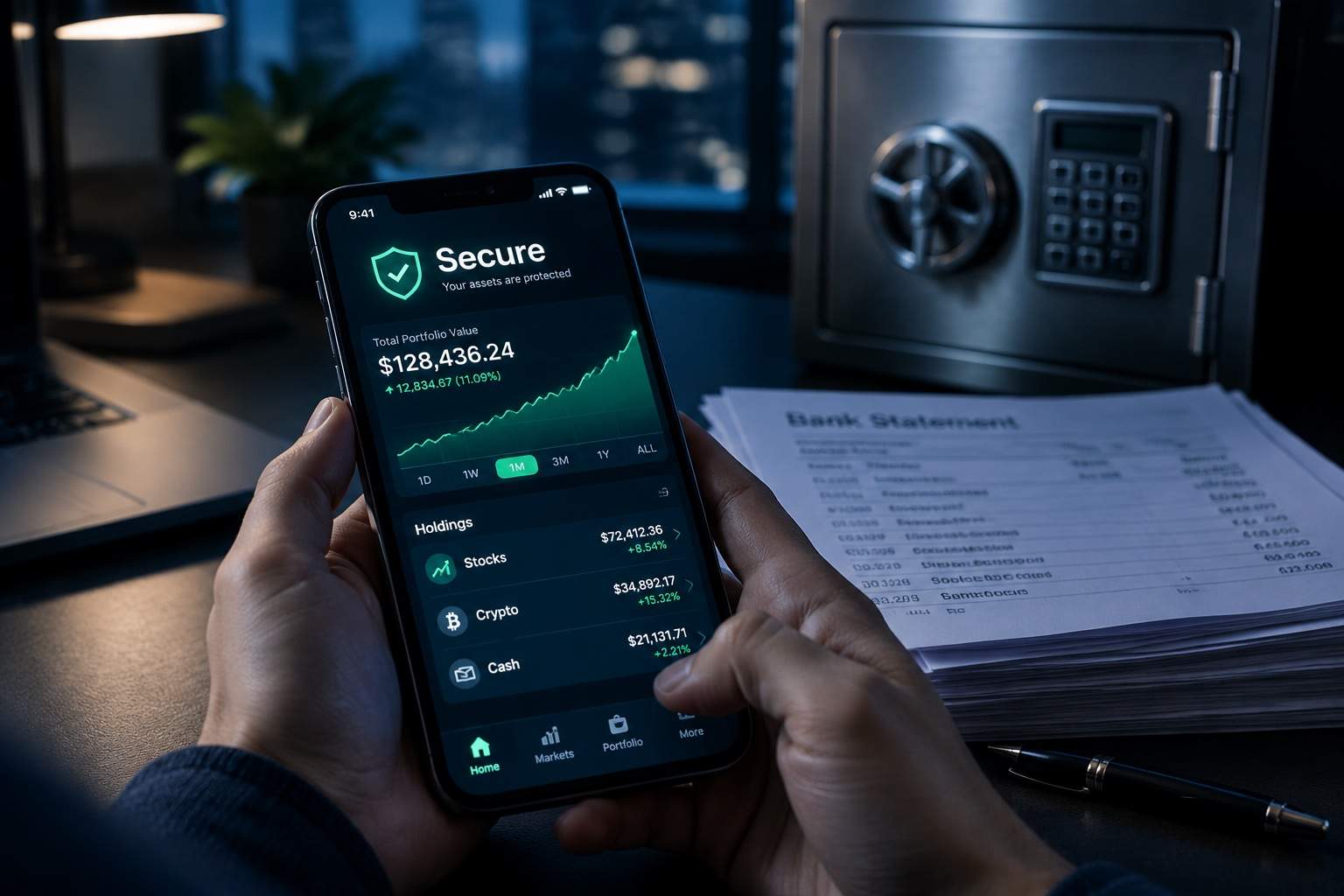
We have become obsessed with the idea that our money should always be reachable. The modern investor wants the returns of a long-term bond with the accessibility of a checking account. This demand for capital liquidity has created a market for platforms that promise the impossible. In the real world, there is almost always a trade-off. If you want high returns, you usually have to lock your money away for a long time or accept that the value might drop significantly in the short term. When a platform claims you can have high growth and instant access, they are often hiding the underlying risk behind a digital curtain.
I have noticed that we tend to trust things that look expensive. If a digital wallet has a clean interface, two-factor authentication, and a professional-sounding support team, we assume the underlying financial structure is sound. Scammers have figured out that they don't need to steal your password if they can convince you to hand over your capital willingly. They use the language of sophisticated financial practitioners to explain away risks. They talk about proprietary algorithms or offshore arbitrage to justify returns that no legitimate bank could offer. By the time the user realizes the liquidity is an illusion, the platform has already moved the goalposts.
The need for immediate access to our money can actually be a massive security flaw in our long-term planning. Real wealth building usually requires time and the acceptance that some money should not be touched for years. When we prioritize platforms that allow us to move funds with a single swipe, we increase the surface area for potential loss. We become more likely to make emotional decisions based on short-term market fluctuations or fall victim to schemes that use the promise of liquidity to lure in large sums of cash. True retirement security often comes from the things we cannot change on a whim.
There is a common narrative that keeping money in a standard bank is a mistake for anyone serious about their future. I disagree with this oversimplification. A traditional account offers a level of regulatory protection and physical oversight that digital-only platforms struggle to match. While the interest rate might be disappointing, the probability of the entire balance vanishing overnight is statistically negligible. When we move money into high-yield digital platforms, we are trading the certainty of slow inflation-driven loss for the possibility of total capital loss. Both are risks, but they are not the same kind of risk.
Individual risk tolerance is not a static number; it changes based on how much you have to lose. For a middle-aged professional, the cost of losing a decade of savings is far higher than the cost of losing three percent of purchasing power to inflation over a year. The game behind the numbers is about survival. If you lose your principal in a sophisticated scheme, there is no amount of market growth that can easily bring you back to where you started. We must ask ourselves if the potential extra two or three percent in yield is worth the tail risk of a total wipeout.
The best way to protect yourself isn't to find the perfect financial instrument, but to establish a logic for your own decisions. Retirement security is not a product you buy; it is a state of balance between different types of assets. You might choose to keep some funds in a low-yield account for safety, some in diversified funds for growth, and some in bonds for steady income. No single digital wallet or high-yield scheme can replace a diversified strategy that acknowledges the reality of risk. When someone offers a universal answer to your financial anxieties, they are usually trying to sell you something, not help you plan.
We often forget that financial practitioners are just as susceptible to trends and psychological biases as everyone else. The obsession with beating the market has led many to believe that caution is outdated. Yet, every few years, we see the same story play out where a secure-looking platform collapses, leaving investors wondering how they missed the signs. The signs are almost always the same: a promise of high returns, the lure of total liquidity, and a professional design that masks a lack of transparency. The most important security feature you have isn't a password; it is your willingness to walk away from a deal that seems too convenient.
The reality of modern finance is that there is no perfect hedge against the future. We are all making trade-offs between different types of uncertainty. Whether you choose the slow erosion of inflation or the volatility of the markets, the goal is to remain in control of the choices you make. A digital wallet can be a tool or a trap, depending on whether you understand the game being played behind the screen. As we look at our savings, we have to decide which ghost we are more afraid of: the one that slowly eats our purchasing power, or the one that can make the entire wallet disappear in a heartbeat.
Disclaimer: Mention of any brand or trademark is for identification purposes only and does not indicate any partnership or endorsement.
