

I’ve been watching financial markets for a long time, and one thing consistently strikes me: how deeply ingrained the idea of a "safe" savings account is in our collective financial psyche. We work hard, save diligently, tucking money away for life’s big moments – a child’s education, a down payment on a home, or the comfortable retirement we’ve earned. For many of us, the local bank account feels like an unshakeable bedrock of security. Yet, lately, as I talk to people and watch the news, that bedrock seems to be shifting, creating a gnawing unease that our money, while physically present, might be shrinking in value while we simply watch.
The truth is, even the most robust local savings account isn't entirely immune to forces beyond its national borders. Take inflation, for instance. We all understand, at some level, that prices go up. What we often underestimate is the relentless, quiet work inflation does on our stored wealth. A dollar or a euro in your account today might physically be the same amount a year from now, but what it can buy could be significantly less. This isn't about your bank making a bad decision; it's about the broader economy. When governments print more money, or when global supply chains get squeezed, or when demand surges, the cost of goods and services rises. Your saved money then simply has less purchasing power. This subtle decline often feels less urgent than a stock market crash, but its long-term effect on your financial goals can be just as profound.
We're often taught to look at the interest rate our savings account pays. A 1% or 2% interest rate might sound reasonable on paper, a steady growth. But that’s a nominal return, the number you see. If inflation is running at, say, 5% – as we’ve seen in many countries recently – then your money, after adjusting for rising prices, is actually losing 3% of its real value every year. It’s a bit like running up a down escalator; you're moving, but you're still heading backwards relative to where you want to be. For short-term needs, like an emergency fund, that trade-off for immediate access is often acceptable. For money you’re holding for decades, it's a significant hidden cost.
Then there’s the global stage, where currencies dance in a constant, intricate ballet. If you live in one country, saving in its local currency might seem like the obvious choice. But what if your child plans to study abroad, or you dream of retiring in a different country, or simply travel extensively? Suddenly, the value of your local currency against others becomes crucially important. A strong dollar today could be a weaker dollar tomorrow against the pound or the yen, simply due to macroeconomic forces like interest rate differentials, trade balances, or geopolitical events.
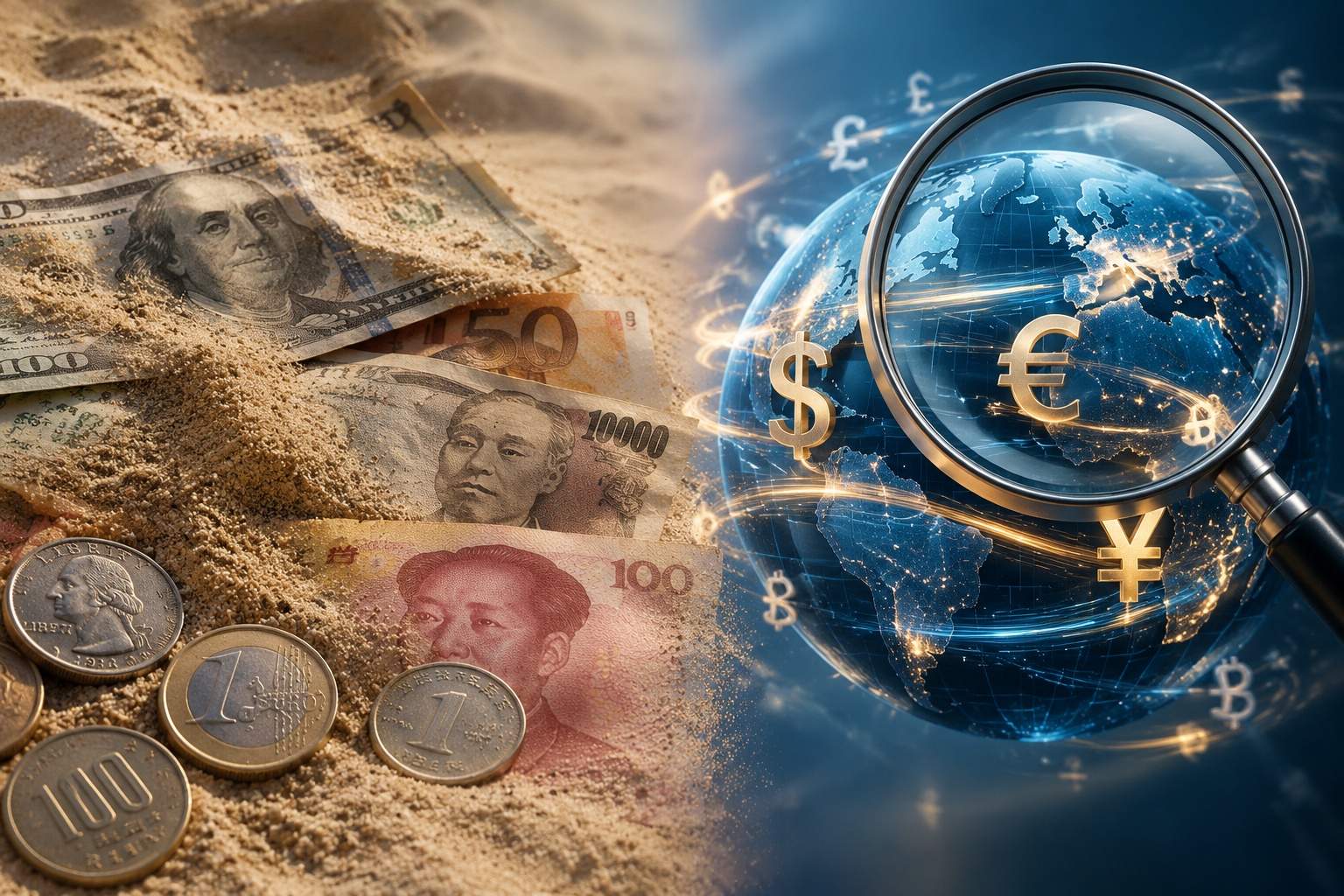
I remember a conversation with a friend who had saved diligently in their local currency for years, planning a grand round-the-world trip. They’d done everything right, or so they thought. But when the time came to exchange their savings into other currencies, a sudden, significant depreciation of their home currency meant their dream trip became a much more modest affair, costing significantly more than they had budgeted in local terms. This wasn't a failure of their savings discipline, but a direct impact of foreign exchange risk – a risk many ordinary savers don't actively consider until it hits them directly. It’s not just for international traders; it impacts anyone whose future aspirations cross national currency lines.
It's comfortable to keep our money close, in an institution we know, in a currency we understand. This familiarity offers a powerful sense of security. And for good reason: local banks offer convenience, liquidity for daily needs, and often government-backed deposit insurance. These are invaluable for managing everyday finances and safeguarding against immediate financial shocks.
However, the question isn't whether local savings are inherently "bad." It's about recognizing their specific role and limitations, especially for long-term goals spanning years or even decades. If your goal is to maintain or grow your purchasing power over time, particularly across different economic landscapes, then limiting your financial strategy solely to a local, low-interest savings account might represent a significant opportunity cost. This isn’t about chasing high returns or taking on excessive risk. It's about being aware that genuine financial safety in a globalized world involves more than just a growing number in your bank statement. It involves understanding the forces that chip away at that number’s real-world value.
So, what's a saver to do? It's certainly not about abandoning your local bank or throwing all your money into high-risk ventures. Instead, it’s about acknowledging that different pots of money serve different purposes, and these purposes might require different approaches. For your immediate emergency fund, liquidity is king, and a local savings account or money market fund remains perfectly rational. You want that cash readily available, even if inflation nibbles at it.
For goals further out – five, ten, twenty years down the line – a more diversified approach might be warranted. This doesn't necessarily mean jumping into the stock market. It could mean exploring avenues like inflation-indexed bonds in your own country, or carefully considered investments in funds that hold a basket of global currencies, or even diversified portfolios that include a mix of domestic and international assets. The key here is not a prescriptive solution, but a shift in perspective: understanding that protecting your wealth's purchasing power might require looking beyond a single currency, a single national economy, or even just cash itself.
There is no universal answer here. Your risk tolerance, your time horizon, your specific life goals, and your debt situation all play a crucial role. A 25-year-old saving for a distant retirement has a very different set of considerations than a 55-year-old planning to use their down payment savings next year. For some, the comfort of holding all assets locally might be worth the potential erosion of purchasing power, given their peace of mind and aversion to complexity. For others, the quiet anxiety of watching their life savings shrink silently might compel them to explore broader solutions. The challenge, and the opportunity, lies in understanding these trade-offs and choosing the path that aligns with your unique financial compass.
Ultimately, the question isn't whether your traditional savings are "right" or "wrong." It's about whether they are still serving the purpose you intend in an increasingly complex and interconnected global economy. Are you proactively managing the value of your money, or just its presence? It's a question I still ponder myself, as the world keeps turning and economic currents continue to shift.
Disclaimer: Mention of any brand or trademark is for identification purposes only and does not indicate any partnership or endorsement.
