

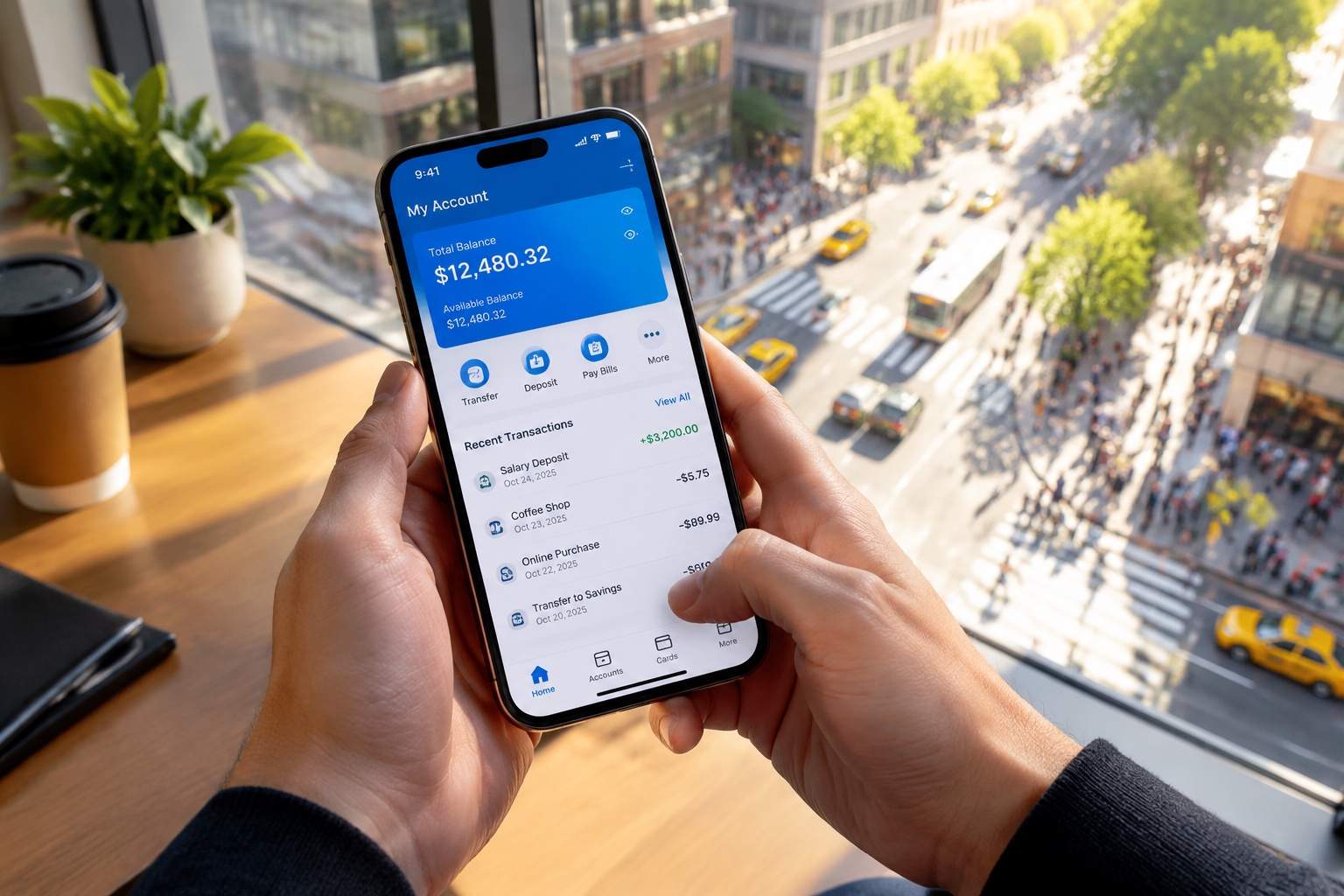
I was sitting across from a friend last week who has what most people would call a high-quality problem. He pointed to his phone screen, showing a high-yield savings account balance that had climbed into the six figures. He should have looked relaxed, but instead, he looked paralyzed. He had just turned down a chance to join a niche professional certification program that could have pivoted his career toward a much higher ceiling. He told me he simply couldn't afford it because he didn't want to see that specific number on his screen drop.
This is a phenomenon I see often in my work as a writer. We spend years being told that cash is king and that a safety net is the only thing standing between us and total ruin. While that is true to an extent, we rarely talk about the psychological trap that a large cash reserve creates. When money is labeled as safety, it becomes emotionally frozen. It ceases to be a tool for progress and becomes a scoreboard for anxiety. We end up paying a quiet tax on our own security, and that tax is paid in the form of missed transitions and stalled personal growth.
Financial practitioners often treat money as a purely mathematical equation, but humans are not calculators. We categorize our money into mental buckets. Once a sum of money is labeled as an emergency fund, it often stays in that bucket even when a life-changing opportunity appears. This creates a strange form of poverty where you have the capital to change your circumstances but lack the permission to use it.
I have spoken with many people who feel a genuine sense of guilt when they contemplate using their savings for anything other than a literal catastrophe. They treat their cash reserve like a museum exhibit rather than a resource. This rigidity means that while they are technically liquid, their lives are remarkably brittle. They are unable to respond to the world around them because their primary goal has shifted from building a life to defending a balance.
The standard advice usually suggests keeping three to six months of expenses in a liquid account. This is a solid baseline, but the problem starts when we stop looking at our actual risks and start chasing a number that makes us feel safe regardless of reality. A tenured government employee with low housing costs does not need the same cash cushion as a freelance consultant in a volatile industry.
If you keep eighteen months of cash in a basic account, you are essentially buying insurance against a very low-probability event. Every dollar beyond what you actually need for a realistic emergency is a dollar that isn't working for you. Over a decade, the gap between what that cash earns and what it could have earned elsewhere becomes a massive invisible expense. We must ask if the extra layer of psychological comfort is worth the tens of thousands of dollars in lost purchasing power over time.
Security is not just about having a pile of money that stays the same. True security often comes from having assets that grow or skills that improve. When we over-allocate to cash, we are betting against our future selves in favor of a static present. This is why understanding the nuances of liquidity is more important than simply following a generic rule of thumb.
Every financial choice is a trade-off, but the cost of holding cash is particularly hard to see because it doesn't appear on a bank statement. You don't get a bill for the career pivot you didn't take or the family memories you skipped because you were protecting a specific balance. We see the interest hitting the account, but we don't see the erosion of value caused by inflation or the compounding gains we walked away from.
In a world where inflation can fluctuate, a stagnant pile of cash is actually a slowly leaking bucket. If the cost of living rises by four percent and your account pays four percent, you haven't actually made any money. You have simply stood still while the world moved forward. When we hold too much cash, we are effectively paying a premium for the option to do nothing. Sometimes that option is valuable, but often it is just an expensive habit.
A liquidity trap in a personal sense occurs when we become so obsessed with having cash on hand that we stop making productive decisions. I've seen people keep fifty thousand dollars in a savings account while carrying high-interest credit card debt or avoiding necessary home repairs that will only get more expensive over time. The "safety" of the cash balance becomes an illusion that masks a deteriorating financial position.
The key to breaking this trap is learning to distinguish between a negative emergency and a positive transition. A broken water heater is an emergency. A three-month period of unpaid leave to study for a new career path is a strategic transition. Both require cash, but many people are only comfortable spending for the former. If we can't use our capital to improve our lives, we have to wonder why we are saving it in the first place.
Cash flow management should be about more than just accumulation. It should be about the movement of capital toward the things that provide the highest utility. Sometimes the highest utility is a boring index fund, but sometimes the highest utility is the freedom to quit a toxic job without a second thought. If the money in your account doesn't give you that freedom, it isn't actually a safety net.
There is no universal answer for how much cash a person should hold. Some people sleep better with a year of expenses in the bank, and that peace of mind has a real value that can't be measured in interest rates. Others are comfortable with a leaner cushion because they have high disability insurance coverage or a very stable income stream. The goal is to reach a point where your money serves your life, rather than your life serving your bank balance.
I often wonder if we would make different choices if our bank accounts showed us two numbers: our current balance and the "potential value" we lost by being too afraid to move. Financial health isn't about having the biggest pile of cash; it's about having the right amount of resources in the right places at the right time.
The next time you look at your savings, try to see it for what it really is. It is a tool, not a trophy. If that tool is sitting in a shed gathering dust while your house needs repairs or your skills need sharpening, it isn't doing its job. We all want to be safe, but we should be careful not to build a fortress so thick that we can't see the opportunities passing by outside the gates.
Disclaimer: Mention of any brand or trademark is for identification purposes only and does not indicate any partnership or endorsement.
