

I’ve spent years looking at financial statements, not just the numbers, but the human stories and decisions behind them. And one narrative I encounter far too often, especially among those of us building lives across borders, is the quiet vanishing act of hard-earned money. You see your nest egg, perhaps in a bank account you’ve trusted for decades, but when it’s time to move funds internationally, or simply gauge its true global purchasing power, a part of it seems to just… evaporate. We comfort ourselves with familiarity, yet this comfort often comes with a steep, invisible price.
It’s easy to focus on the balance on your statement. That figure gives us a sense of security, a tangible representation of our efforts. But for anyone whose life or finances touch more than one country, that comfort can be a mirage. I’m talking about the silent, insidious ways our money loses value when it crosses borders or sits in a strategy designed for a singular geography. This isn't about outright fraud; it's about the everyday mechanics of international finance that subtly chip away at your wealth.
Let's start with the most obvious culprit: fees. We’ve all been there, needing to send money home, or pay a bill in another country. A quick bank transfer, right? You might see a flat fee of $25 or $50 and think, "Okay, that's the cost of doing business." But that flat fee is rarely the whole story. Banks often use less-than-favorable exchange rates, baking in their profit margin there too. So, while you pay a visible fee, your money is simultaneously converted at a rate that's less advantageous than the mid-market rate you might see on a currency converter app. It’s a double whammy, and for recurring transfers, these seemingly small percentages compound into significant foreign exchange loss over time. Your comfortable local bank, designed for local transactions, becomes an expensive conduit for your global life.
The problem isn't just about sending money. Holding funds in a single currency, even if it's a major one, can expose you to significant foreign exchange loss when that currency weakens against others relevant to your spending or investment goals. If you're planning retirement in a country with a different currency, or supporting family abroad, a fluctuating exchange rate can drastically alter your purchasing power. A hypothetical scenario: you save religiously in USD, but then the USD depreciates against the Euro just as you plan to buy property in Spain. Suddenly, your hard-earned dollars buy less. This isn’t a risk for a local saver, but for a global one, it’s a constant, often overlooked, variable.
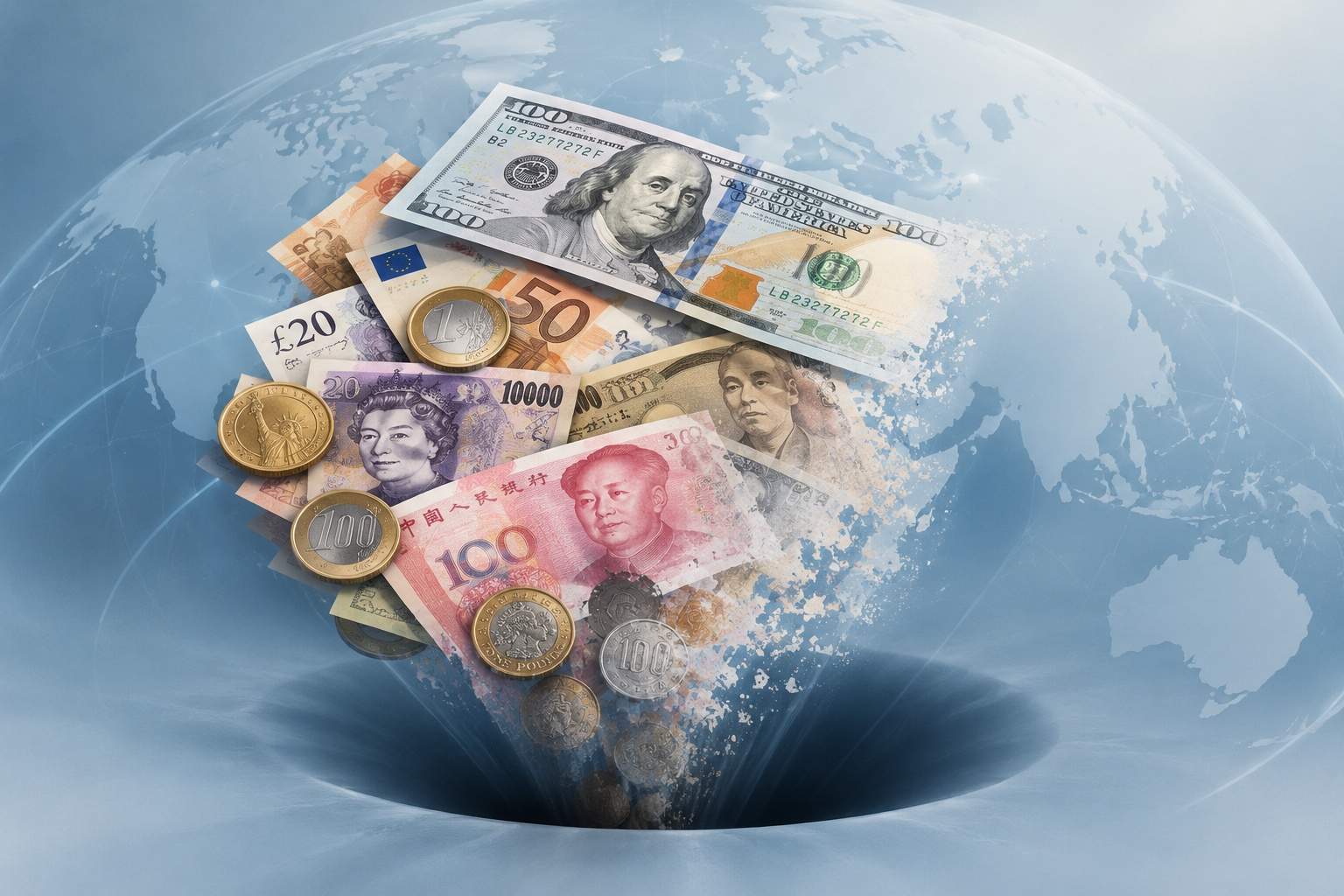
For expats, the financial landscape is even more complex. It's not just about getting paid and sending money; it’s about aligning your savings, investments, and risk management with a life that transcends borders. Many default to maintaining accounts in their home country, perhaps out of habit or perceived simplicity. However, this often means missing out on structures designed for their unique situation. What if your home country bank account offers paltry interest rates, while another jurisdiction could offer competitive returns without prohibitive taxes, especially when considering your tax residency? It's a critical component of expat financial planning that often gets overshadowed by immediate concerns like visas and housing.
The same principle applies to investment. Keeping all your investments within a single national market, even a robust one, inherently limits diversification and potential growth. A truly global investment strategy considers opportunities beyond national borders, diversifying across economies, industries, and asset classes worldwide. This isn't about chasing exotic, high-risk ventures. It's about recognizing that growth and stability don't reside solely in one geographic location. Your local stock market might be doing well, but what if a globally diversified portfolio could offer similar returns with less volatility, or even higher returns with a reasonable increase in risk? The comfort of investing where you live can blind you to a world of possibilities.
This brings us to concepts like offshore banking and multi-currency accounts. These aren't just for the ultra-rich or for illicit activities, as popular media might suggest. For a global citizen, they are legitimate tools for managing cross-border savings efficiently. An offshore account might offer higher interest rates, tax advantages (depending on your tax residency and jurisdiction), or simply the ability to hold multiple currencies without constant, costly conversions. A multi-currency account directly addresses the foreign exchange loss issue, allowing you to hold euros, yen, or pounds and convert them strategically, rather than being forced to convert at an unfavorable rate whenever funds move. The key is understanding their function and whether they fit your specific needs and situation, not simply dismissing them as "too complex" or "only for others."
The core question often comes down to priorities. When does prioritizing immediate access to capital, whether local or international, unknowingly trade away significant long-term growth and security? Keeping everything in a highly liquid, easily accessible local account is great for emergencies, a short-term fund. But for long-term cross-border savings, that same comfort can become a drag. The low-interest rates typical of such accounts, combined with the invisible drains of fees and unfavorable exchange rates, mean your money is barely treading water, let alone swimming towards your global dreams. The real challenge isn't choosing between saving and investing, or between local and global banking. It's about understanding the specific function of each dollar, planning its journey, and then choosing the right vehicle for that journey, across whatever borders it needs to travel.
The comfortable path often feels safest. But for those of us living a global life, that comfort might just be obscuring the true cost of inaction, leaving us with a nest egg that feels a little lighter each time it crosses a border. The real question isn't whether your money is safe, but whether it’s truly working for the global life you’re building.
Disclaimer: Mention of any brand or trademark is for identification purposes only and does not indicate any partnership or endorsement.
