

As I woke up to yet another interest rate hike notification this morning, my thoughts immediately turned to the grocery bill I saw just yesterday. It's a feeling I know many of you share: that widening gap between what's coming in and what's going out. It’s not just about the big loans we might be carrying; it's the daily, silent erosion of financial comfort, a gnawing anxiety where every decision feels like a desperate trade-off. We're caught in a cycle of needing credit to bridge the gap, only to find the gap growing larger. This isn't just numbers on a spreadsheet; it's the stress etched on people’s faces, the compromises families are forced to make.
For decades, one of the bedrock principles of personal finance felt immutable: get out of debt as fast as humanly possible. Debt was the enemy, interest its insidious weapon. And for good reason, too – carrying high-interest debt can indeed be a heavy burden, siphoning away future wealth. But in today's economic climate, where inflation feels like a heat-seeking missile for our savings and interest rates climb with a relentless upward trajectory, I've found myself asking: is aggressively paying down every debt always the most resilient strategy? Or, paradoxically, could it leave us more vulnerable to the next unexpected financial shock?
The cost of living crisis isn't a theoretical concept; it's the higher price of milk, the soaring electricity bill, the car repair that suddenly costs twice what it did last year. When every essential expense increases, our disposable income shrinks, even if our wages see a modest bump. Simultaneously, central banks raise interest rates to combat this very inflation. For those with variable-rate debt – like many mortgages or personal loans – monthly payments jump. The old adage of "pay down debt first" still sounds appealing, but what if, in our zeal to eliminate debt, we deplete our emergency savings just as life decides to throw us a curveball? What happens when the car breaks down, or an unexpected medical bill arrives, and all our cash is tied up in yesterday's debt payment?
This isn't to say debt isn't a problem; high-interest consumer debt, especially on credit cards, almost always warrants swift action. The interest rates can be predatory, and the compounding effect truly is a wealth destroyer. But we need to look beyond the simple "debt equals bad" equation. There’s a crucial distinction between different types of debt and, more importantly, the conditions under which we tackle them.
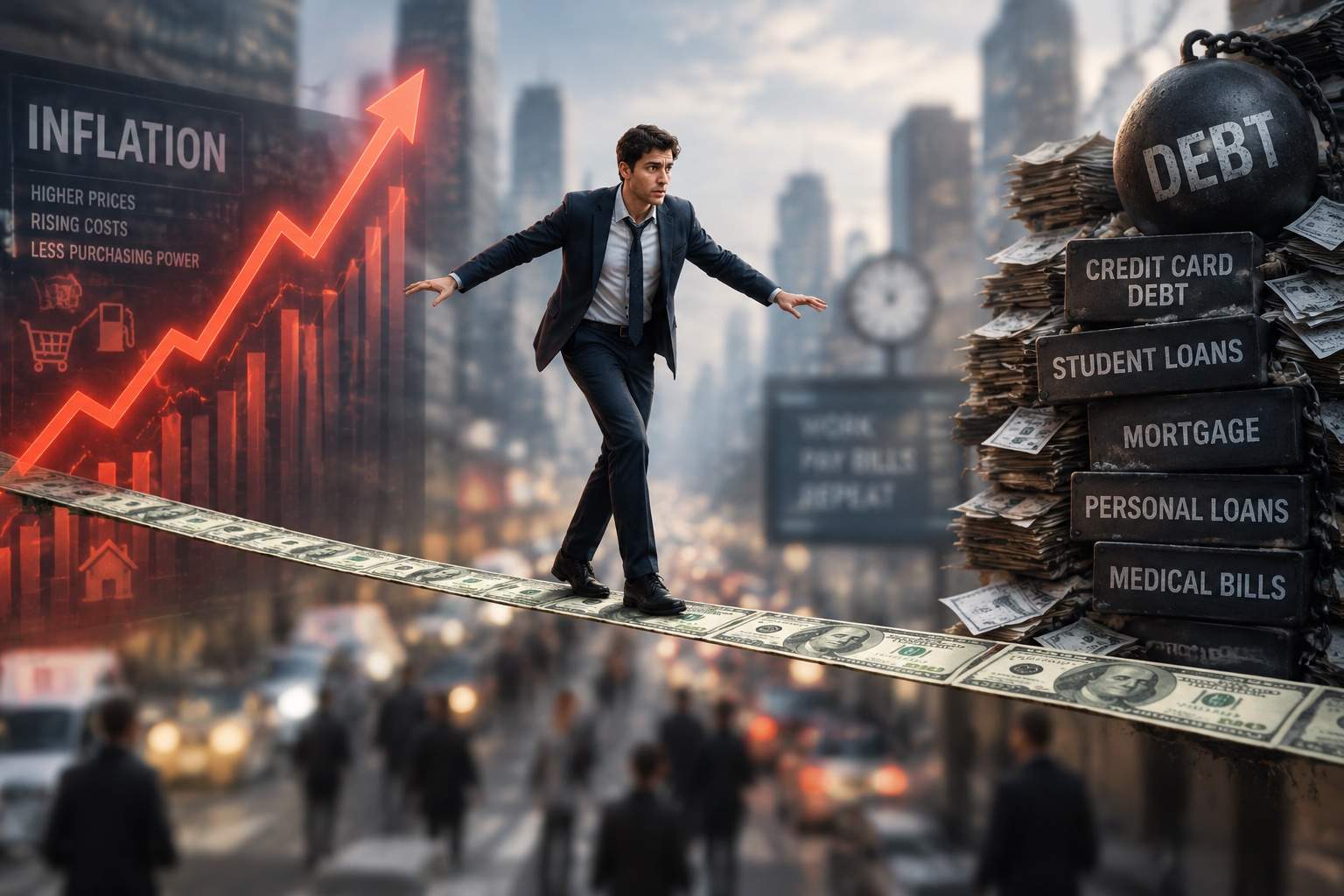
Consider a hypothetical scenario: Sarah has $10,000 in an emergency fund earning a meager 1% interest and a $10,000 personal loan at 7%. The traditional advice would be to use the emergency fund to pay off the loan, saving 6% annually. Mathematically, it seems sound. But what if Sarah loses her job three weeks later? With no emergency fund, she’s immediately reliant on new debt – perhaps a high-interest credit card – to cover living expenses. Her original 7% loan burden is gone, replaced by a 20%+ credit card bill and the added stress of an empty savings account. Here, the "smart" move of aggressive debt repayment actually created a new, more immediate vulnerability. It’s not about denying the math, but acknowledging the real-life sequence of events and the often-overlooked value of liquidity.
In an era where "financial freedom" feels like a distant dream for many, what truly constitutes a "smart" financial move for the average household? It’s not about finding a magic bullet or the single "best" investment. Instead, I believe it's about striking a delicate balance: present well-being balanced with future security, without falling into the trap of endless consumption or paralysis by analysis.
For me, a smart financial move begins with understanding your personal resilience. Do you have a robust emergency fund – perhaps three to six months of essential expenses – tucked away in an easily accessible savings account? If not, building that buffer might be a higher priority than aggressively attacking a low-interest mortgage, even if the interest rate has risen. This isn't just about money; it’s about peace of mind, the ability to weather a storm without spiraling into deeper debt. Once that foundation is solid, then we can look at the interest rates on our various debts. Perhaps splitting your extra cash between building that buffer and making extra payments on the highest interest debt is the right initial play. There's no one-size-fits-all answer, because life is not one-size-fits-all.
What I often see is a disconnect between the purely logical, numerical approach to finance and the messy, unpredictable reality of human life. We are not robots optimized for maximum financial gain; we are people with jobs, families, dreams, and anxieties. The "game behind the numbers" is often about managing those anxieties and choices. For some, the psychological relief of paying off a certain debt, even if it's not mathematically optimal, outweighs the marginal financial benefit of keeping cash in a savings account. And that, I believe, is a valid personal choice, as long as it’s an informed one.
So, how do we navigate this "silent squeeze"? I don't have a definitive answer for everyone, but I do have questions I encourage people to ask themselves. What is your personal risk tolerance for having no liquid cash? What’s the interest rate on your lowest interest debt versus the interest rate on your highest? What are your short-term and long-term financial goals? Are you prioritizing a feeling of security, or purely numerical optimization? And critically, what unexpected shocks could derail your plan, and how prepared are you for them? There are rarely easy answers, only carefully considered trade-offs. The goal isn't to eliminate all financial risks, but to understand them and position ourselves to absorb the inevitable blows without collapsing under the weight of future debt.
Disclaimer: Mention of any brand or trademark is for identification purposes only and does not indicate any partnership or endorsement.
