

I signed the papers at 24. $32,000 sedan. $580 a month for six years. The salesman called it “building credit.” I called it adulting. Three years later, I needed to move cross-country. The car was worth $14,000. I owed $19,000. That $5,000 hole wasn’t a loan. It was a cage. I couldn’t sell the car without writing a check I didn’t have. I was trapped by my own driveway.
The average new car payment in America is now over $700 a month. Used cars are $500. Most people see this as normal. It’s not normal. It’s a wealth transfer from your future self to a bank and a dealership. And the worst part? The car is losing value every single morning while you sleep.
Here’s what the “0% financing” ads don’t tell you: a car loan is the single biggest obstacle to building middle-class wealth. Not lattes. Not Netflix. The metal box in your garage.
A new car loses 20% of its value the moment you drive off the lot. Another 10-15% each year for the next four years. Your loan balance? It barely budges in the first two years because most of your payment goes to interest.
Real example from a client: A teacher bought a $45,000 SUV with $5,000 down and a 7% loan. Monthly payment: $790. After two years, she had paid $18,960. Her loan balance: $32,000. Her car’s value: $28,000. She owed $4,000 more than the car was worth. That’s negative equity. She was stuck. She couldn’t sell. She couldn’t trade in without rolling that $4,000 into a new loan. The bank owned her schedule.
Every mile you drive drops the resale value. A car with 60,000 miles is worth roughly half of what it was at 20,000 miles. Your loan doesn’t care about miles. You pay the same $790 whether you drive 5,000 miles or 50,000. The bank wins either way.
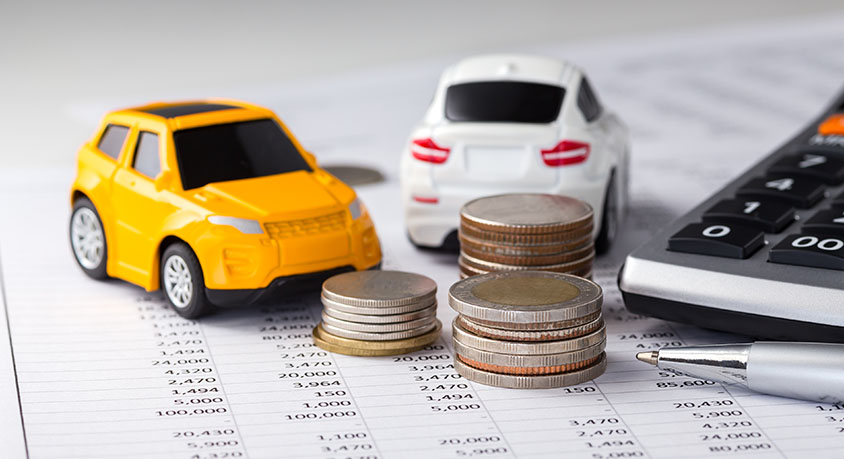
Negative equity means you owe more than the asset is worth. With a house, that’s painful but survivable because houses eventually recover. With a car? Values never recover. They go down until the car is scrap.
I learned this after my cross-country move. I couldn’t afford to sell the car. So I kept paying $580 for another two years. By then, the car was worth $8,000. I finally paid it off. Total cost: $32,000 purchase price plus $6,000 interest. Sold for $8,000. Net loss: $30,000. That’s not a car expense. That’s a used Porsche I never got to drive.
Dealerships love negative equity. They’ll “roll over” your unpaid balance into a new loan. You get a new car, and your old debt follows you like a ghost. I’ve seen people roll $5,000 of negative equity into a $40,000 truck, then roll another $7,000 into a $50,000 SUV three years later. They’re paying $900 a month for a vehicle worth $35,000. They will never escape.
Let’s do the math they don’t teach in high school. $600 a month invested in a low-cost S&P 500 index fund from age 25 to 65 at 7% real returns grows to roughly $1.5 million. Not $1,500. $1.5 million. That’s what your car payment costs you over a working lifetime.
Real numbers from a reader: A couple in their 30s had two car payments totaling $1,100 a month. I showed them this chart. They sold one car, paid off the other, and bought a $12,000 used Honda with cash. They invested the $1,100 monthly. Ten years later, that account had $190,000. Their friends with the new SUVs? Still making payments. Still broke. Still wondering why.
Everyone says “but I need a reliable car for my kids/my commute/snow.” Reliable used cars exist. A five-year-old Toyota or Honda with 60,000 miles will run for another 100,000 miles with basic maintenance. It costs $12,000 to $18,000. Pay cash. Drive it for a decade. The “reliability” of a new car costs you a million dollars. That’s expensive peace of mind.
If you absolutely must finance, use this rule from The Money Guy Show. 20% down. Pay off in 3 years or less. Monthly payment no more than 8% of your gross monthly income.
Example: $30,000 car. 20% down = $6,000. Finance $24,000 for 36 months at 6% = roughly $730 a month. 8% of gross income means you need to earn about $110,000 a year. If you earn less, the car is too expensive.
Run this test before signing anything. If you lost your job today, could you make the car payment for six months from your emergency fund? Most people say no. That’s the sign you’re overextended. A car payment should be annoying. Not terrifying.
Step one: Calculate your car’s current value on Kelley Blue Book or Edmunds. Print your payoff statement from the lender. Subtract value from payoff. That’s your hole. Face it.
Step two: If the hole is under $5,000, save up cash to cover the difference. Then sell the car privately (not trade-in). Buy a $10,000 used car with cash. Yes, it’s a downgrade. Yes, you’ll survive.
Step three: If the hole is over $5,000, aggressively pay down the loan until you break even. Throw every side hustle dollar at it. Then sell. I did this with a $4,000 hole by driving for a ride-share app on weekends. Three months of misery. Then freedom.
After you escape, keep paying yourself that $600 monthly payment. But now it goes into a separate brokerage account. Call it “next car fund.” In five years, you’ll have $40,000. Pay cash for your next car. Never finance again. This is how wealthy people drive. They don’t have lower car payments. They have no car payments.
I’ve been car payment free for seven years. My current car is a 2016 Mazda bought for $14,000 cash. It has 110,000 miles. It starts every morning. That $600 I don’t send to the bank goes into my Roth IRA. Last year, that contribution grew by 12%. My neighbor’s new truck grew by negative 15% and a $9,000 interest bill.
Here’s my question for you: if a bank offered you a deal where you give them $600 a month for six years and in return they give you an asset that’s worth half what you paid, would you take it? Now look at your driveway. Why are you still saying yes?
Disclaimer: Mention of any brand or trademark is for identification purposes only and does not indicate any partnership or endorsement.
